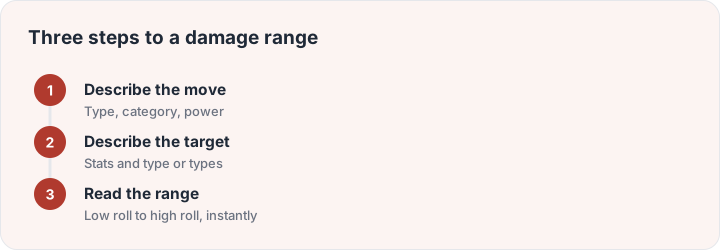
How to use this calculator
Start with the Quick start buttons if you are unsure what numbers to enter: they fill in realistic stats for a typical physical attacker, a special attacker or a tank, and you can adjust from there. The calculator updates the moment any input changes — no calculate button, because the number you want is always better visible while you are still tuning the move.
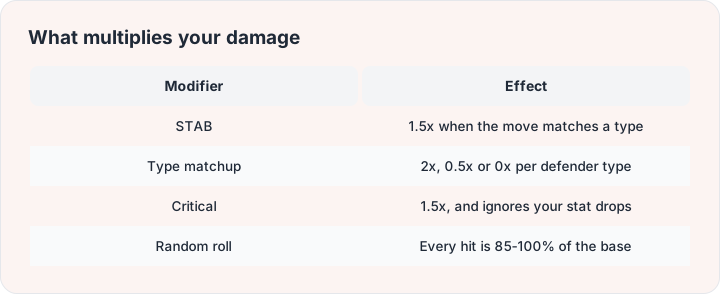
The two inputs that matter most are the move type against the defender’s types and the attack-versus-defense stat ratio. Everything else modifies around those: STAB adds half again when the move matches your own type, a critical hit adds half more and ignores your own stat drops, weather boosts or cuts the elemental moves you would expect, and the stat change box covers the common “I used a swords dance” case. The result shows the full range because every hit rolls a random factor from 85% to 100% — the low end is the unlucky roll, the high end the lucky one.
Reading the result like a player
The percentage line converts the damage into the defender’s HP, which is how battles are actually planned. Below 30% is pressure; above 50% is a real threat; at 100% or more the label switches to OHKO — one hit knocks out. Two hits to knock out (2HKO) is the standard planning unit for battles, so the label tells you which side of that line you are on. Remember the defender’s stats change the answer more than anything else: the same attack that 2HKOs a frail attacker might barely scratch a tank, which is why the Tank preset exists.
When a result confuses you — why does water do almost nothing there? — check the interactive type chart with the defender’s types, and the damage formula walkthrough explains each multiplier in plain language. For the numbers behind your stats themselves (why is my Attack 100 and not 150?), the natures, IVs and EVs guide unlocks that whole layer. And once you are planning more than one attack at a time, the team building guide is the next step up.